Be yourself; Everyone else is already taken.
— Oscar Wilde.
This is the first post on my new blog. I’m just getting this new blog going, so stay tuned for more. Subscribe below to get notified when I post new updates.
Be yourself; Everyone else is already taken.
— Oscar Wilde.
This is the first post on my new blog. I’m just getting this new blog going, so stay tuned for more. Subscribe below to get notified when I post new updates.
Water Privatization?
Water resources are empowered and maintained by organizations such as government. When these public organization shift it to private organizations. Privatization basically means controlling or maintaining the of water systems or water resources. Company may work with municipality plant to maintain a water treatment plant or waste water facility.
At the point when Bolivia chose to privatize water administration at tremendous level, people of Bolivians took dissent to roads. Law was forced and in savagery one individual was slaughtered and some were harmed. It was assessed that privatizing water administrations is terrible for the earth also for the poor which prompts insufficient appropriation of water. The issues is that in certain nations, for example, Canada, new water is modest and an enormous sum, so its get squandered. On the off chance that water conveyance was privatized, the cost for singular shopper who is devouring it will naturally increment.
Here is link shows water privatization in Bolivia

Desalination process-
Desalination is the removal of salt and mineral components from a substance. Water desalination is a process where mineral components are removed from salt water. The salt water is desalinated so that human being can use water for consumption and other requirements or home use (Cohen-Tanugi & Grossman, 2012). Desalination is mostly applied in the ships and submarines to provide them with water for drinking during the travels and their work. The main focus of desalination is to provide a cost-effective water, which is fresh for human use in areas that have a limited supply of fresh water (Surwade et al., 2015). The fresh water that is obtained can be used for irrigation, drinking and giving to animal. The by-product from desalination is used as table-salt .
This process was invented in antiquity, and since then different technologies have been developed. The Hellenic Philosopher, in the 4th century BC, indicated that desalination technique is whereby non-potable water is evaporated and finally condensed to potable liquid. This process produces fresh water that can be used by human prior to the water that was not useable by human . The philosopher was clear on the best process that produces the best quality water. Since that time, this technology has become popular and is applied to produce fresh water from sea water where limited supply of fresh water is evident
Sailors boiled sea water to produce steam and the steam was absorbed to produce potable water. This was supported by Alexander of Aphrodisias to show how sea water was desalinated to be used by human beings. The two philosophers, the Hellenic and Alexander are the one to be focuses on when showing the methods of desalination of water to produce the best water for human use and irrigation. This water can also be used for leisure when collected in swimming pools through desalination on large scale.
Desalination is the process of removal of salt from seawater. It provides essential water for drinking or industrial purposes. Most of the water was produced by desalination. However, reverse osmosis and electrodialysis are equally becoming important for the same. Another techniques was with the usage of sand filters. Also, a technique used wool wick to siphon the water, salt gets trapped in the wool.
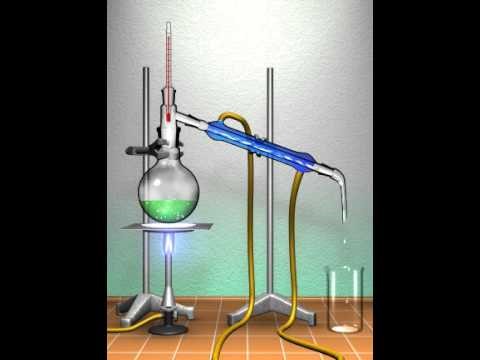
Distillation involves boiling of seawater from dissolved salt. Heat required for distillation comes from burning fossil fuels. In order to reduce cost and pollution, desalination plants are designed in a way to use less fossil fuels as possible. For more efficiency desalination plants are linked with electrical power plants.
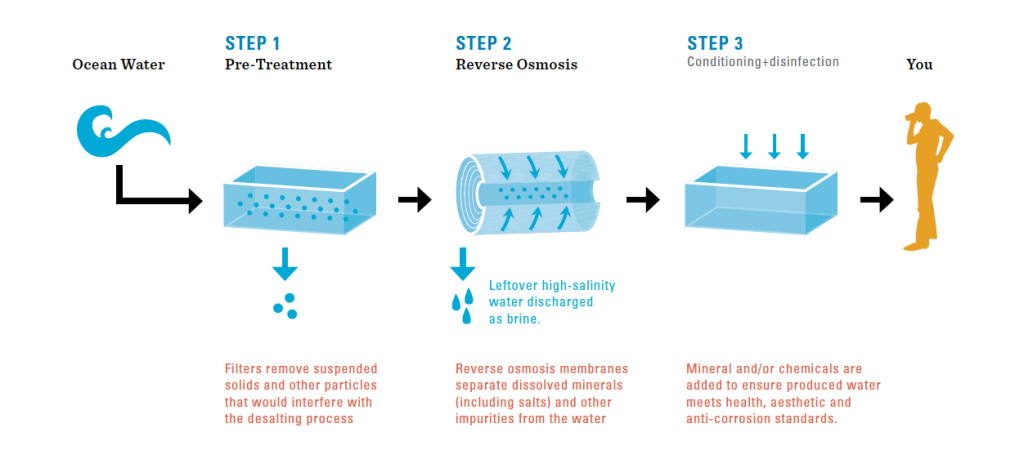
Reverse osmosis use high amount of pressure to push pure water out of saltwater. Like switch assimilation, electrodialysis is by and by most appropriate for desalinating harsh water. Salts comprise of particles, which are iotas that have procured electrical charge by losing or picking up electrons. Due to their charge, particles are pulled in to oppositely charged anodes submerged in the saltwater. They push toward the terminals, leaving an area of unadulterated water behind. Unique films keep the particles from floating once more into the filtered water as it is siphoned out.

Benefits of desalination-
These are portable and easy to install so that cost can be reduced to some extent. They are appropriate for commercial purposes.
Reverse osmosis make water so pure that we actually need to put minerals back into it. The taste of water changes as well. Hence, remineralization takes care of taste as well as regulates pH.
Limitations of desalination-
Many nations of the world do not have capability to construct or operate desalination projects. The water produced from the desalination process is quite expensive than ground water system.
In order to produce desalinated water energy is utilized on a huge level.
Bottled water-
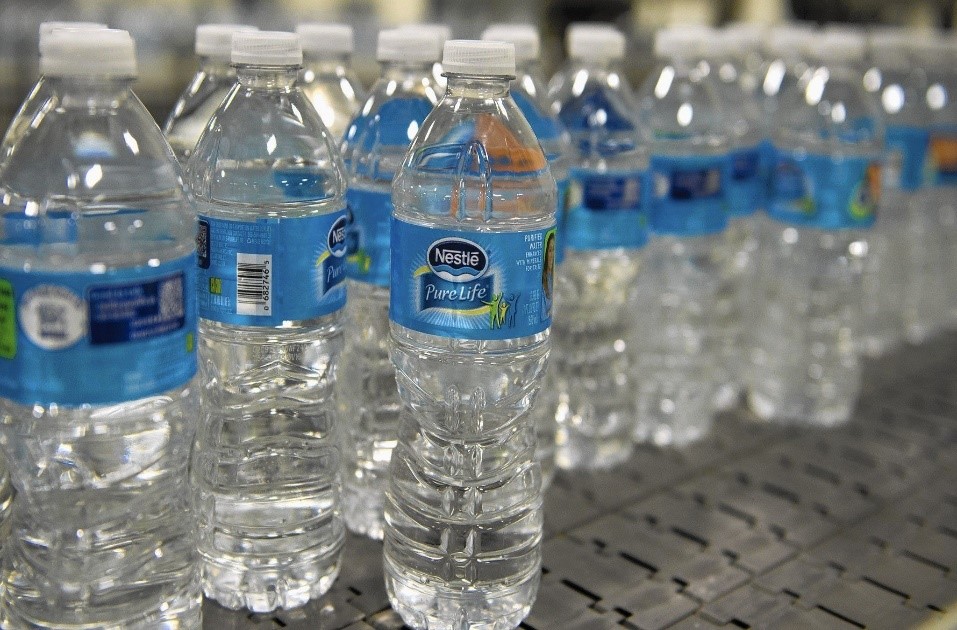
Filtered water is seen by numerous individuals just like a more secure option in contrast to different wellsprings of water, for example, faucet water. Filtered water utilization has expanded even in nations where clean faucet water is available.
Pros of bottled water-
Easy to carry from one place to another, while traveling or on various trips.
Bottles are recyclable and can be reused. Once used bottles can be used for various purposes for various drinks.
Cons of bottles water-
Bottles are harmful for environment, though bottles can be recycled but some people dispose them after use.
Sometimes this plastic adds into water resources which can cause serious diseases to humans as well as aquatic life.
References:
This is an example post, originally published as part of Blogging University. Enroll in one of our ten programs, and start your blog right.
You’re going to publish a post today. Don’t worry about how your blog looks. Don’t worry if you haven’t given it a name yet, or you’re feeling overwhelmed. Just click the “New Post” button, and tell us why you’re here.
Why do this?
The post can be short or long, a personal intro to your life or a bloggy mission statement, a manifesto for the future or a simple outline of your the types of things you hope to publish.
To help you get started, here are a few questions:
You’re not locked into any of this; one of the wonderful things about blogs is how they constantly evolve as we learn, grow, and interact with one another — but it’s good to know where and why you started, and articulating your goals may just give you a few other post ideas.
Can’t think how to get started? Just write the first thing that pops into your head. Anne Lamott, author of a book on writing we love, says that you need to give yourself permission to write a “crappy first draft”. Anne makes a great point — just start writing, and worry about editing it later.
When you’re ready to publish, give your post three to five tags that describe your blog’s focus — writing, photography, fiction, parenting, food, cars, movies, sports, whatever. These tags will help others who care about your topics find you in the Reader. Make sure one of the tags is “zerotohero,” so other new bloggers can find you, too.

 water
water